
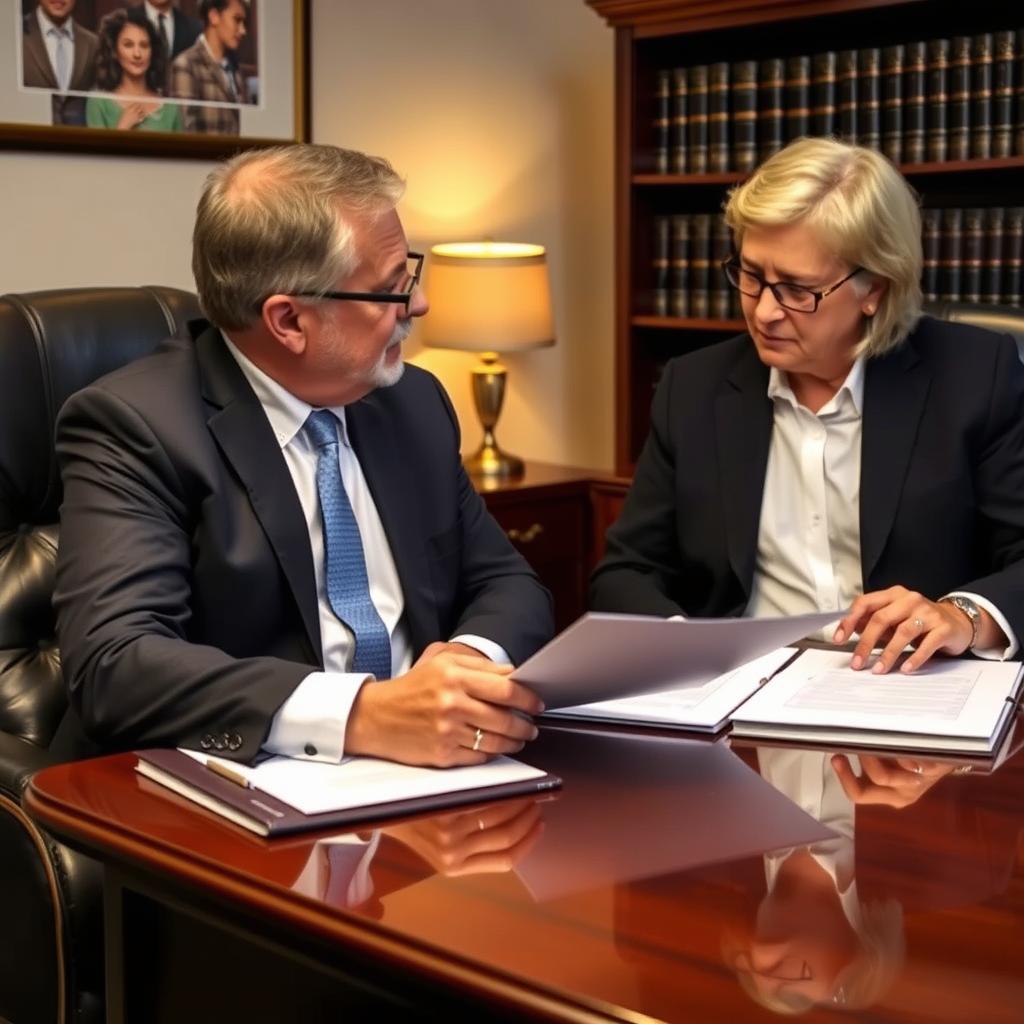
Business Succession Lawyer Prince George County, VA
Business succession planning addresses the orderly transfer of a company’s ownership and management when an owner retires, sells, or passes away. In Prince George County, Virginia, Mr. Sris and his Of Counsel at Law Offices Of SRIS, P.C. work with business owners to structure succession strategies that align with long-term goals. The firm, founded in 1997, serves clients throughout the Richmond metropolitan area from its Richmond location and is available by appointment. Reach the firm at (888) 437-7747. Law Offices Of SRIS, P.C. – Advocacy Without Borders.
Prince George County businesses—whether family-held farming operations, manufacturing firms, or service enterprises—benefit from proactive succession planning that minimizes disruption and preserves value. The process involves reviewing entity governance documents, drafting buy-sell agreements, coordinating valuations, and integrating estate planning considerations. Mr. Sris and his Of Counsel bring a practical approach shaped by decades of experience advising Virginia business owners, ensuring each plan reflects the owner’s vision while complying with state law.
What Business Succession Means in Prince George County
Business succession in Prince George County is governed by Virginia’s integrated framework of corporate, partnership, and probate statutes. The Virginia Stock Corporation Act (Va. Code § 13.1-601 et seq.) provides the default rules for corporations, while the Virginia Limited Liability Company Act (Va. Code § 13.1-1000 et seq.) and the Virginia Uniform Partnership Act (§ 50-73.79 et seq.) cover other common entity types. For closely held businesses, the succession plan typically intersects with estate planning under Title 64.2, making coordination between corporate and probate counsel important.
Virginia business succession planning involves the Virginia Stock Corporation Act (Va. Code § 13.1-601 et seq.) for corporations and the Virginia Limited Liability Company Act (Va. Code § 13.1-1000 et seq.) for LLCs.
Source: Virginia Code. Virginia Code Title 13.1
Reviewed by Mr. Sris, admitted in VA/MD/DC/NJ/NY.
The Virginia State Corporation Commission charges a $100 filing fee for LLC articles of organization.
Source: Virginia SCC. SCC Business Entity Filings
Reviewed by Mr. Sris, admitted in VA/MD/DC/NJ/NY.
The Virginia State Corporation Commission charges a $75 charter fee for a stock corporation, plus a registration fee based on authorized shares.
Source: Virginia SCC. SCC Business Entity Filings
Reviewed by Mr. Sris, admitted in VA/MD/DC/NJ/NY.
Local businesses frequently file formation documents with the State Corporation Commission and record deeds or financing statements with the Prince George County Circuit Court. The Circuit Court also handles lawsuits involving business disputes and probate matters that may arise when an owner dies without a clear succession plan. The General District Court, located at 6601 Courts Drive, Prince George, Virginia 23875, is where smaller civil claims may be heard—though business succession disputes over larger interests typically proceed in Circuit Court.
Prince George County General District Court is currently presided over by Hon. Thomas Stark IV. Court hours: Mon-Fri 8:30AM-4:30PM. Counsel appearing on business law matters should plan filings accordingly.
Proximity to major transportation corridors such as I-295 and Route 10 makes Prince George County accessible to business owners, and the firm’s Richmond location provides a convenient point of contact. While the firm does not maintain a physical presence in Prince George County, Mr. Sris and his Of Counsel routinely serve clients there, appearing in local courts and meeting by appointment.
A well-crafted succession plan addresses contingencies beyond the death or retirement of an owner, including disability, divorce, or disputes among co-owners. In Prince George County, where many enterprises are multi-generational, buy-sell agreements funded by life insurance or promissory notes are a common tool. The firm ensures that the chosen mechanism complies with Virginia’s statutory requirements and that all parties understand their rights and obligations before finalizing any agreement.
How Mr. Sris and His Of Counsel Handle Business Succession Cases
An initial consultation with Mr. Sris and his Of Counsel focuses on the owner’s objectives, the business’s structure, and the family or partner dynamics involved. The firm reviews existing operating agreements, corporate bylaws, and any prior estate planning documents. If no documents exist, the team explains the options for creating a comprehensive succession framework that protects the business and its stakeholders.
Based on the consultation, the firm drafts the necessary agreements—often a buy-sell agreement, amended operating agreement, or shareholder agreement—and coordinates with the owner’s accountant and financial advisor to address valuation and tax implications. The process includes confirming that the chosen transfer methodology aligns with the Virginia Stock Corporation Act or LLC Act, as applicable, and that any required filings with the State Corporation Commission are completed.
When disputes arise over an intended succession—such as challenges to a buy-out price or a claim that a surviving spouse’s elective share threatens the business—the firm represents clients in negotiation, mediation, and, if necessary, litigation in the Prince George County Circuit Court. The timeline for finalizing a plan varies based on the complexity of the business, the number of parties involved, and the court’s calendar, but the firm works to advance each matter as efficiently as the circumstances permit.
Throughout the engagement, Mr. Sris and his Of Counsel provide advice grounded in experience with Virginia business law. The firm does not promise specific outcomes, but its attorneys draw on over 120 years of combined legal experience to guide business owners through the succession planning process. Results may vary.
About Mr. Sris and His Of Counsel Team
Mr. Sris, Owner and Founder of Law Offices Of SRIS, P.C., established the firm in 1997 and has built a multi-state practice spanning Virginia, Maryland, the District of Columbia, New Jersey, and New York. A former prosecutor, Mr. Sris brings a disciplined approach to legal problem-solving. He testified before the Virginia House Courts of Justice Committee in support of 2019 HB 635 (chief patron Del. David Bulova).
Mr. Sris and his Of Counsel team handle business law matters with a collaborative approach. While Mr. Sris and his Of Counsel oversees each engagement, the Of Counsel attorneys—who are non-employee practitioners engaged through Excella—contribute specialized knowledge in areas such as business entity formation, contract negotiation, and commercial litigation. The collective experience of this team exceeds 120 years, and the firm has handled 4,739+ documented firm-wide results. Results may vary.
Frequently Asked Questions
What is a business succession plan?
A business succession plan is a set of legal documents that establishes how a business’s ownership and management will transfer upon retirement, death, or other triggering events. It typically includes a buy-sell agreement, updated operating or shareholder agreements, and integration with the owner’s estate plan. In Virginia, the plan must comply with the applicable entity statute—such as the Virginia Stock Corporation Act for corporations—and may require filings with the State Corporation Commission. A well-structured plan minimizes disputes and helps the business continue without interruption.
Do I need a lawyer for business succession planning in Prince George County?
While you are not legally required to use a lawyer, drafting enforceable succession agreements and ensuring compliance with Virginia corporate and probate laws typically requires legal guidance. An experienced business lawyer reviews existing governance documents, drafts buy-sell terms, coordinates with tax professionals, and advises on valuation. Mistakes in the governing agreements or failure to follow statutory formalities can lead to litigation that disrupts the business after the owner’s departure.
How does a buy-sell agreement protect my business?
A buy-sell agreement controls who may own shares or interests in the business after a triggering event such as death, disability, divorce, or an owner’s decision to leave. It sets a purchase price or valuation formula, identifies permitted transferees, and may include funding mechanisms like life insurance. When drafted under Virginia’s Uniform Commercial Code and applicable entity statutes, the agreement helps prevent unwanted co-owners and provides liquidity to the departing owner’s estate without forcing the business to sell assets.
How does business succession differ from estate planning?
Business succession planning focuses on the transfer of a business interest, while estate planning addresses the disposition of an individual’s personal assets through wills, trusts, and beneficiary designations. The two areas intersect when the business forms a significant portion of the owner’s estate. In Virginia, coordination is important because the probate process and the elective-share rules under Title 64.2 can affect the business if not properly accounted for in the succession and estate plan.
What happens if business partners do not have a succession plan?
Without a plan, Virginia law may impose a default structure on the business, often through the entity’s governing statute or the owner’s will. For example, an LLC member’s death without an operating agreement may cause the business to dissolve or leave heirs with an illiquid interest they cannot sell easily. Disputes among surviving owners, heirs, or a deceased owner’s spouse can lead to court proceedings in the Prince George County Circuit Court, which can be costly and time-consuming. Proactive planning avoids this uncertainty.
Internal references: The firm provides business law services in other Virginia communities: Fairfax County Business Lawyer | Prince William County Business Lawyer | Manassas Business Lawyer.
Virginia Code Title 13.1 | SCC business entity filings | Virginia Courts
Attorney advertising. Prior results do not guarantee a similar outcome. Case results depend on a variety of factors unique to each case. Results may vary. Attorney responsible for this advertising: Mr. Sris.