
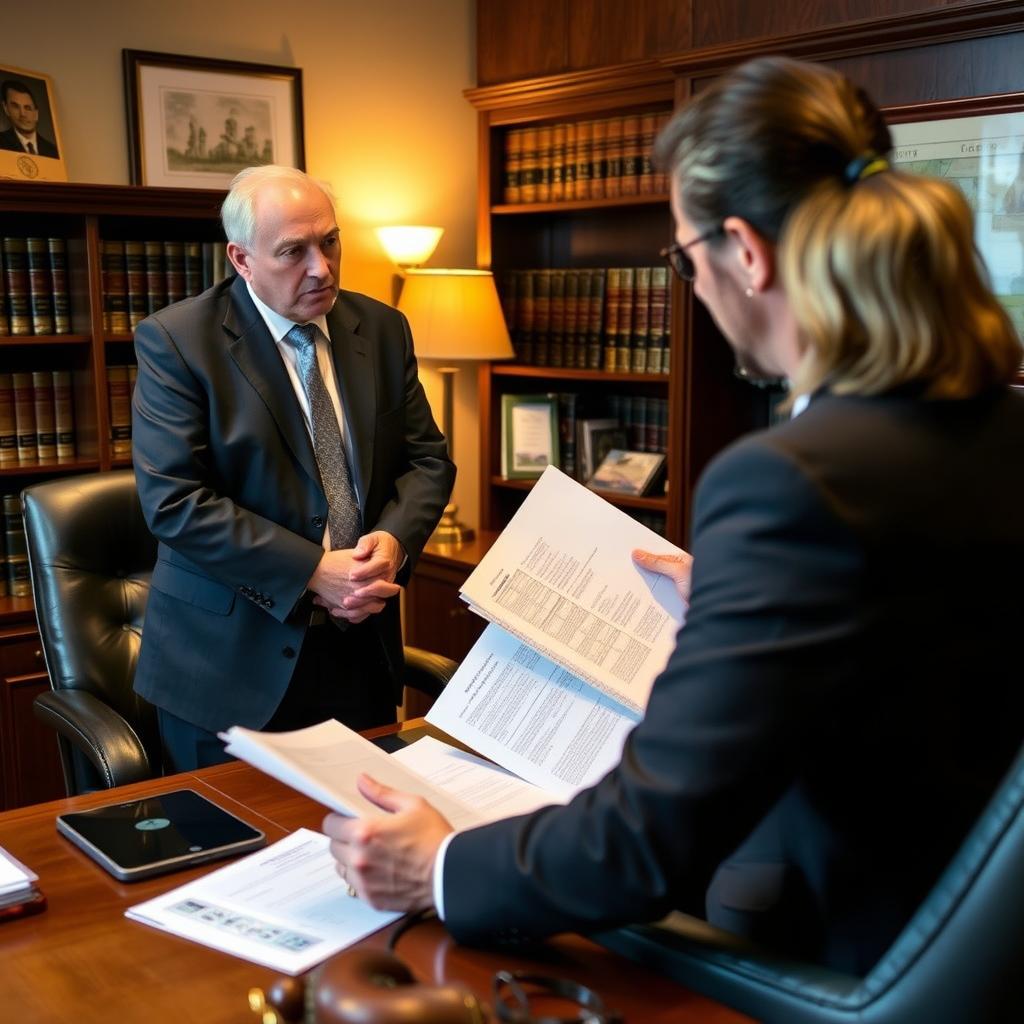
Business Succession Lawyer King William County, VA
Planning the future of a business in King William County, Virginia, requires far more than a handshake or a verbal understanding. Whether you run a family‑owned farm, a professional practice, or a small manufacturing company along Route 30, the decisions you make today about who will lead and own the business tomorrow can affect your family, your employees, and your legacy for decades. Business succession law intersects corporate governance, estate planning, and tax strategy, and even a well‑drafted document must withstand scrutiny by the State Corporation Commission, the Virginia courts, and sometimes the Internal Revenue Service. At Law Offices Of SRIS, P.C., Mr. Sris and his Of Counsel team concentrate on helping King William County business owners design succession plans that are clear, enforceable, and aligned with Virginia’s statutory framework. Our Richmond location serves clients throughout the county—from King William to West Point and Aylett—and the firm brings over 120 years of combined legal experience and has achieved over 4,739 documented firm-wide results. Results may vary. For a consultation about your business succession needs, call (888) 437‑7747. Law Offices Of SRIS, P.C. – Advocacy Without Borders.
What Business Succession Means in King William County
Business succession in King William County is the process of identifying and preparing a successor to own and operate a business after the current owner retires, becomes incapacitated, or passes away. In Virginia, the legal foundation for succession planning draws from several chapters of the Code—most notably the Virginia Stock Corporation Act (§ 13.1‑601 et seq.), the Virginia Limited Liability Company Act (§ 13.1‑1000 et seq.), and the estate administration provisions found in Title 64.2, including § 64.2‑100 et seq. Because the county is part of the Ninth Judicial District and falls within the jurisdiction of the King William County Circuit Court at 351 Courthouse Lane, any dispute arising from a poorly executed succession plan will be resolved in that courthouse. Local businesses—many of them agricultural, light industrial, or retail—must comply with the same SCC filing and annual‑report obligations as enterprises in Richmond or Fairfax, yet the close‑knit nature of the community means that a succession impasse can ripple through family and business relationships quickly.
King William County sits between Richmond and Williamsburg along Routes 30, 360, and 33, and its economy includes small Main Street shops in West Point, professional firms, and working farms that have been family‑held for generations. In these settings, a succession plan often involves multiple generations: a founder who wants to retire, adult children with varying levels of interest in the business, and perhaps a key employee who deserves an ownership stake. A properly structured plan will specify whether the business transfers as a gift, a sale, or through a trust; it will update the company’s operating agreement or corporate bylaws accordingly; and it will anticipate potential friction by establishing a clear buy‑sell mechanism. When a plan is absent or vague, intestate succession laws under Title 64.2 take over, which can result in fragmented ownership, forced liquidation, or court‑supervised administration that drains the enterprise of value. Mr. Sris and his Of Counsel team understand the local dynamics and can help business owners craft a plan that respects both Virginia law and the unique character of the Upper Tidewater region.
How Mr. Sris and His Of Counsel Handle Business Succession Cases
Business succession planning at Law Offices Of SRIS, P.C. begins with a thorough conversation about the owner’s goals, the current structure of the entity, and the capabilities and interests of the proposed successor. Mr. Sris and his Of Counsel bring over 120 years of combined legal experience and have achieved over 4,739 documented firm-wide results. Results may vary. The firm’s approach is to treat the succession as a multi‑step process: first, evaluating whether the existing entity—corporation, LLC, or partnership—is the optimal vehicle for the transition; second, drafting or updating the governing documents to reflect the chosen succession path; third, coordinating with the client’s CPA and financial advisor so that the tax consequences of the transfer are well understood; and finally, creating a timeline that allows the outgoing owner to gradually hand over responsibilities while maintaining the business’s stability.
If a dispute arises, the firm’s business litigation experience becomes relevant. Whether a disagreement among co‑owners over valuation, a challenge to the authority of a successor, or a breach of a buy‑sell agreement, Mr. Sris and his Of Counsel are prepared to appear in the King William County Circuit Court and other Virginia tribunals. The team understands that litigation is only one tool among many and will often first explore mediation or structured negotiations to preserve the business and keep the parties out of court. Throughout the process, the firm’s guidance is grounded in the Virginia Stock Corporation Act, the LLC Act, and the statutory framework for fiduciary duties, ensuring that every step complies with current law and protects the owner’s personal assets.
About Mr. Sris and His Of Counsel Team
Mr. Sris, Owner and Founder of Law Offices Of SRIS, P.C., has been practicing law since 1997 and is admitted in Virginia, Maryland, the District of Columbia, New Jersey, and New York. A former prosecutor, Mr. Sris has a background in litigation that sharpens the firm’s ability to anticipate how a succession dispute might play out in an adversarial setting. In 2019, he testified before the Virginia House Courts of Justice Committee in support of HB 635 (chief patron Del. David Bulova), a bill that addressed certain statutory aspects of Virginia family law—a legislative experience that underscores his familiarity with the Virginia Code and the legislative process.
Mr. Sris is supported by a team of Of Counsel attorneys, each bringing a distinct set of skills to business law matters. The firm’s business law practice benefits from the analytical depth of an Of Counsel who holds a Ph.D. In Communication from the University of California, Santa Barbara, and whose peer‑reviewed research on negotiation and professional communication directly informs the drafting of precise, enforceable succession agreements. Collectively, Mr. Sris and his Of Counsel have documented thousands of case results across multiple practice areas. When clients in King William County engage the firm, they draw on the resources of a multi‑state law practice with a local footprint: the Richmond location at 7400 Beaufont Springs Drive, Suite 300, Room 395, Richmond, VA 23225, serves King William, West Point, Aylett, and the surrounding communities.
Frequently Asked Questions
What is business succession planning?
Business succession planning is the legal process of arranging for the transfer of ownership and operational control of a business upon the owner’s retirement, incapacity, or death. In Virginia, this involves reviewing the entity’s governing documents—whether a corporation’s articles and bylaws or an LLC’s operating agreement—and ensuring they contain provisions that specify who will succeed the owner, how the ownership interest will be valued, and under what conditions a transfer will occur. The process often includes drafting buy‑sell agreements, cross‑purchase or redemption provisions, and coordinating the business plan with the owner’s personal estate planning documents. Without a formal plan, Virginia’s default corporate and probate statutes determine the outcome, which may not align with the owner’s wishes.
Do I need a lawyer for business succession planning in King William County?
While Virginia law does not require you to hire an attorney to create a succession plan, working with an experienced business succession lawyer helps ensure that the plan is legally sound and enforceable. A knowledgeable attorney can analyze your current entity structure, identify potential conflicts among family members or co‑owners, and draft agreements that comply with the Virginia Stock Corporation Act, the LLC Act, and the relevant fiduciary‑duty statutes. In King William County, where many businesses are family‑held and personal relationships often intertwine with business decisions, an attorney can also serve as a neutral third party who can guide sensitive conversations and reduce the risk of future litigation.
How can I ensure a smooth transfer of my business to the next generation?
The most reliable method for a smooth generational transfer is to create a written succession plan that covers governance, valuation, transition timeline, and contingency measures. The plan should clearly identify the successor, define the terms under which ownership and management will transfer, and establish a remuneration arrangement that fairly compensates the outgoing owner. Mr. Sris and his Of Counsel can assist by reviewing or amending your company’s governing documents, preparing a buy‑sell agreement that sets a fixed price or a valuation formula, and coordinating with your tax advisor to minimize capital gains or gift tax exposure. Regularly reviewing the plan as family circumstances or tax laws change is equally important.
What happens if a business owner dies without a succession plan?
If a business owner dies without a succession plan, the disposition of the business will be governed by Virginia’s intestate succession laws and the default rules in the entity’s governing statute. For a corporation, the shares will pass to the owner’s heirs, who may have no interest or ability to run the business. For an LLC, the operating agreement’s default provisions—or the Virginia LLC Act if no agreement exists—may trigger dissolution or leave the surviving members in an unclear position. The probate process can delay decision‑making, and the King William County Circuit Court may need to appoint a personal representative to oversee the business during administration. This frequently results in diminished value, family conflict, and unwanted liquidation.
Can I sell my business to a third party in King William County?
Yes, you can sell your business to an outside buyer, but the transaction must comply with your entity’s governing documents and Virginia’s corporate or LLC statutes. If your operating agreement or shareholder agreement contains a right of first refusal or a co‑sale provision, those terms must be honored before a sale to a third party can close. An attorney can review the existing agreements, advise on any required consents from other owners, and structure the asset or stock purchase agreement to protect your interests. Mr. Sris and his Of Counsel have experience handling business purchase and sale transactions throughout Virginia and can guide you through the negotiation and closing process.
How does a buy‑sell agreement protect my business?
A buy‑sell agreement establishes in advance what will happen to an owner’s interest upon certain triggering events—such as death, disability, retirement, or divorce—and thereby provides continuity and certainty for the business. By setting a predetermined price or a valuation method, the agreement avoids costly and time‑consuming appraisal fights. It also restricts the transfer of ownership to outsiders without the consent of the remaining owners, protecting the company from unwanted partners. In Virginia, a well‑drafted buy‑sell agreement can be a critical component of a succession plan, and it should be tailored to the specific type of entity and the number of owners involved. Mr. Sris and his Of Counsel regularly draft and review these agreements for clients throughout King William County and the surrounding region.
Additional Virginia business succession resources: Business succession planning in Fairfax County · Business succession lawyer Prince William County, VA · Manassas business succession planning attorney
Primary legal sources: Virginia Code Title 13.1 (Corporations) · SCC Business Entity Filings · Virginia Judicial System
Attorney advertising. Prior results do not guarantee a similar outcome. Results may vary.
Case results depend on a variety of factors unique to each case.