
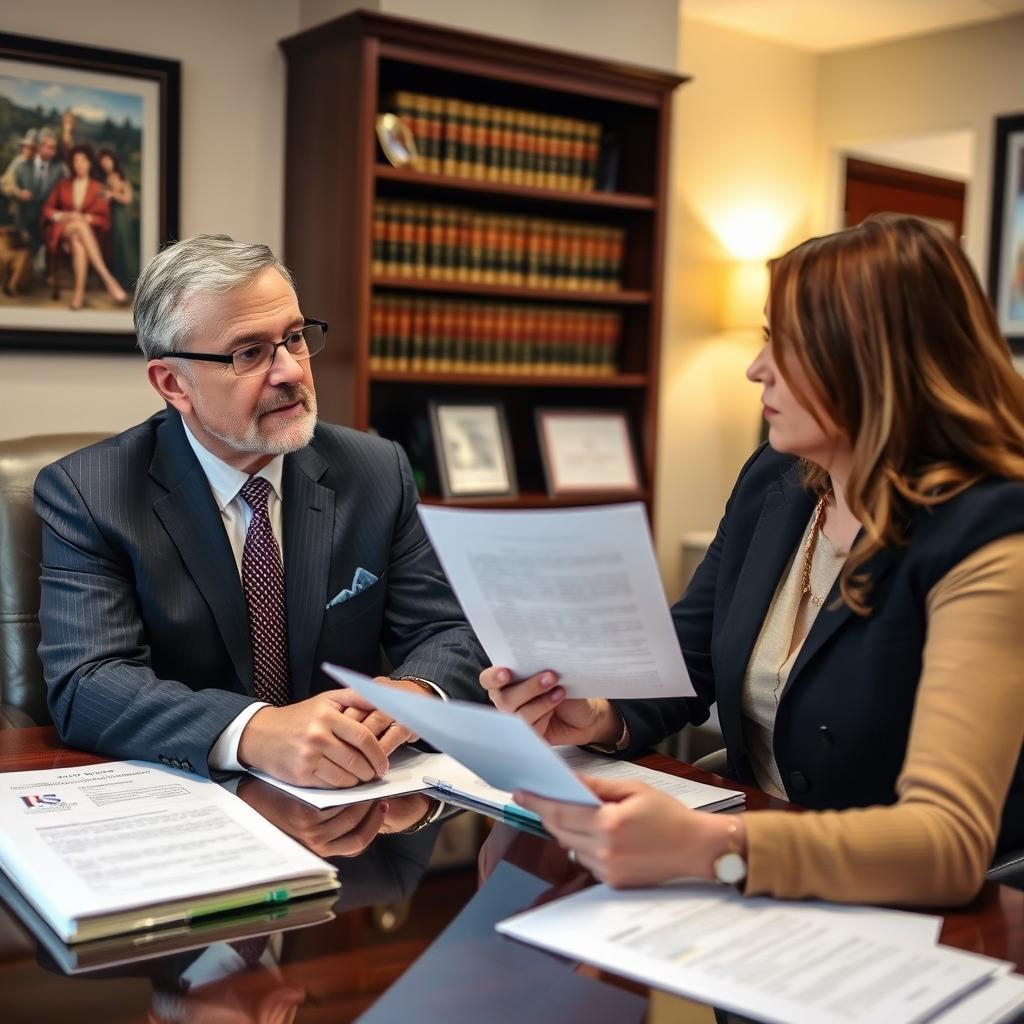
Business Estate Planning Lawyer Prince George County, VA
For more than two decades, Jim and Susan Parker built a thriving logistics company from their headquarters just off Route 10 in Prince George County. As Jim approached retirement, they needed to decide not only who would run the business next, but how to transfer ownership fairly among their three children—one active in the company, two pursuing separate careers. They discovered that a plan built solely around a will would not protect the business from family conflict, tax surprises, or operational disruption. The Parker family needed business estate planning. Law Offices Of SRIS, P.C. works with owners across Prince George County, Hopewell, and the surrounding region to design ownership transitions that preserve what owners have built while providing clarity for the next generation. Reach Mr. Sris and his Of Counsel at (888) 437-7747 to request a consultation. Law Offices Of SRIS, P.C. – Advocacy Without Borders.
Business Estate Planning for Prince George County Owners
Business estate planning combines corporate-structure decisions with personal-estate objectives. In Virginia, business entities—whether a limited liability company, a corporation, or a partnership—each carry distinct default rules for what happens when an owner retires, becomes incapacitated, or passes away. Without a deliberate plan, a Prince George County business may be divided among family members in ways that disrupt day-to-day operations, or it may trigger unintended tax consequences under both federal and Virginia law.
Virginia’s Stock Corporation Act, Limited Liability Company Act, and Revised Uniform Partnership Act each prescribe default ownership-transition rules when the governing documents are silent. The State Corporation Commission handles business entity filings, including amendments to operating agreements and articles of incorporation. Owners in Prince George County who plan ahead can shape those transitions instead of leaving them to statutory defaults—choices that affect not only who controls the company but also whether key contracts, licenses, and financing arrangements survive an ownership shift.
How Mr. Sris and His Of Counsel Handle Business Estate Planning
Mr. Sris and his Of Counsel bring over 120 years of combined legal experience and 4,739+ documented firm-wide results to business estate planning matters. Results may vary. Their approach begins with the owner’s goals for the company—whether continuation by the next generation, a sale to key employees, or a managed wind-down—and builds a structure that aligns entity governance with estate-planning instruments. Because Law Offices Of SRIS, P.C. Practices across multiple practice areas, its team can coordinate the corporate, tax, and family-law dimensions of a business transition without the fragmentation that occurs when an owner must retain separate firms for the entity work and the estate work.
The process typically examines the governing documents of the business entity, reviews buy-sell agreements or the absence thereof, evaluates tax-planning vehicles including trusts, and integrates the plan with the owner’s personal estate documents. For business owners in Prince George County whose companies operate with significant assets, multi-state contracts, or family-member involvement, Mr. Sris and his Of Counsel work to anticipate friction points—including potential challenges under Virginia’s equitable-distribution framework should a divorce intersect with business ownership—and address them before they become disputes.
Overview of the Process
The timeline for a business estate plan varies by case complexity, the number of owners, and the state of the company’s existing documents. Typically, the work proceeds in stages: an initial consultation to define objectives, a review of the entity structure and any existing estate-planning instruments, development of proposed amendments or new documents, and implementation—which may include filing amendments with the State Corporation Commission, executing updated operating or shareholder agreements, and coordinating with the owner’s estate-planning attorney if separate counsel is involved. Owners in Prince George County can expect a schedule driven by the court’s calendar where court proceedings are needed, though most business estate planning is accomplished through drafting and negotiation rather than litigation.
Potential Consequences of Not Planning
When a Virginia business owner fails to plan for succession or incapacity, the results depend on the entity’s default rules. For an LLC, the Virginia LLC Act may transfer the economic interest to the owner’s heirs while vesting management authority in the remaining members—or, if the owner was the sole member, the entity may dissolve. For a corporation, shares pass through probate, potentially placing a court-appointed administrator in a position to vote on corporate decisions. In both cases, the business may be exposed to estate-tax liability without a corresponding plan for liquidity, and family members may find themselves in a governance structure they never agreed to. Addressing these issues in advance through careful drafting can avoid personal liability for directors or officers and preserve the business as a going concern.
About Mr. Sris and His Of Counsel Team
Mr. Sris, Owner and Founder of Law Offices Of SRIS, P.C., formed the firm in 1997. A former prosecutor, he is admitted to practice in Virginia, Maryland, the District of Columbia, New Jersey, and New York. Mr. Sris testified before the Virginia House Courts of Justice Committee in support of 2019 HB 635 (chief patron Del. David Bulova). His Of Counsel include attorneys with extensive experience in business, contract, and commercial law, as well as family-law and tax planning, allowing the team to address the overlapping legal issues that often arise in business estate planning.
Frequently Asked Questions
What is business estate planning?
Business estate planning is the process of creating a legal framework for the ownership transition of a company upon an owner’s retirement, incapacity, or death. It typically involves amending operating or shareholder agreements, creating buy-sell provisions, coordinating the business entity structure with a personal estate plan, and addressing tax implications under Virginia and federal law. The goal is to preserve business continuity and protect the interests of owners, their families, and the company’s employees.
Do I need a lawyer for business estate planning in Prince George County?
You are not legally required to retain a lawyer to create a business estate plan, but a Virginia-licensed attorney helps ensure the plan complies with state entity laws and the tax code, and that it will be enforceable if challenged. Because business estate planning often crosses the boundaries of corporate law, real estate, tax, and family law, engaging counsel early reduces the risk of costly drafting errors and oversights that can lead to litigation among family members or business partners.
How does Virginia law affect my business succession plan?
Virginia law governs the formation, governance, and dissolution of business entities formed in the Commonwealth, including default rules for ownership transfer when an owner dies or withdraws. Under the Virginia Stock Corporation Act, LLC Act, and partnership statutes, the default rules may not align with an owner’s intentions. A business estate plan overrides those defaults through carefully drafted provisions, providing a clear path for ownership transition, management authority, and asset distribution.
What happens to my business if I do not have a succession plan?
In the absence of a plan, Virginia’s default entity rules and probate procedures control, which may result in ownership passing to individuals who lack business experience or whose interests conflict with the company’s continued operation. For a sole-member LLC, the entity may dissolve. For a partnership, Virginia’s Revised Uniform Partnership Act dictates dissociation and potentially winding up. These outcomes can be avoided through tailored business estate planning documents executed during the owner’s lifetime.
Can a business estate plan help reduce Virginia estate taxes?
Virginia does not impose a state estate tax, but business owners with substantial assets may still face federal estate-tax exposure, and a well-structured plan can minimize that liability. Strategies may include the use of trusts, valuation discounts, gifting programs, and life-insurance funded buy-sell agreements designed to provide liquidity for tax payments. Early planning is essential because many tax-efficient tools require time to implement properly.
What is a buy-sell agreement and why is it important?
A buy-sell agreement is a contract among business owners that governs what happens to an owner’s interest upon triggering events such as death, disability, retirement, or divorce. In Virginia, a properly drafted buy-sell agreement can fix a valuation method, identify permitted purchasers, and set payment terms, preventing the business from falling into the hands of unintended parties. It works in tandem with the entity’s governing documents and the owner’s personal estate plan.
How does business estate planning differ for LLCs and corporations in Virginia?
Virginia LLCs are governed by the Virginia LLC Act, which provides more flexibility in drafting member-control and transfer provisions, while corporations are subject to the Virginia Stock Corporation Act with more rigid board-and-shareholder requirements. That structural difference affects the design of buy-sell provisions, voting rights, and management succession. An experienced business lawyer can recommend the entity form that best supports the owner’s long-term estate-planning objectives.
What should I bring to an initial consultation with a business estate planning lawyer?
You should bring copies of the business’s articles of incorporation or organization, operating or partnership agreements, existing buy-sell provisions, personal estate-planning documents, recent tax returns, and a list of key employees or family members involved in the company. This information allows Mr. Sris and his Of Counsel to assess the current legal structure, identify gaps, and provide informed guidance about the next steps in building a coordinated business estate plan.
How do I find a business estate planning lawyer in Prince George County, Virginia?
Many business owners find a lawyer through referrals from their accountant or financial advisor, by contacting the Virginia State Bar’s lawyer referral service, or by reaching out to an experienced multi-state firm such as Law Offices Of SRIS, P.C. When choosing counsel, consider whether the lawyer handles both business entity matters and estate planning, and whether they understand the local courts and the State Corporation Commission’s filing requirements.
What role do trusts play in Virginia business estate planning?
Trusts can serve as vehicles for holding business interests, achieving estate-tax savings, avoiding probate, and providing for professional management of the business after the owner’s death or incapacity. A properly structured trust may own LLC membership units or corporate shares, allowing the trustee to manage the interest without the delays of probate. The specific type of trust—revocable living trust, irrevocable life insurance trust, or grantor retained annuity trust—depends on the owner’s tax profile, family situation, and liquidity needs.
Can I change my business estate plan later if my circumstances change?
Yes, a Virginia business estate plan can be amended as long as the owner retains capacity and follows the amendment procedures specified in the governing documents. Regular review is recommended, particularly after significant events such as a change in the business’s value, the entry or exit of a partner, a marriage or divorce, or changes in federal tax law. Mr. Sris and his Of Counsel can advise on the proper method of amendment to ensure the revisions are enforceable and consistent with existing agreements.
Is business estate planning the same as personal estate planning?
No, business estate planning focuses on the continuity and transfer of a business entity, while personal estate planning addresses an individual’s overall assets, guardianship of minor children, and personal healthcare directives. The two disciplines intersect because business interests are often the most valuable asset in an owner’s personal estate. Coordinating both areas through a single law firm or through close cooperation between attorneys is a best practice that helps avoid conflicting instructions and unnecessary tax consequences.
Related Practice Areas and Virginia Locations
Our firm serves business owners throughout Virginia. Learn more about related services:
· Fairfax County Business Lawyer
· Fairfax City Business Lawyer
· Prince William County Business Lawyer
· Manassas Business Lawyer
Virginia Primary Legal Resources
· Virginia Code Title 13.1 (Corporations, LLCs, Partnerships)
· Virginia State Corporation Commission – Business Entity Filings
· Virginia Judicial System
Attorney advertising. Prior results do not guarantee a similar outcome.
Results may vary.
To request a consultation, call (888) 437-7747. Law Offices Of SRIS, P.C. Meets clients at its Richmond location at 7400 Beaufont Springs Drive, Suite 300, Room 395, Richmond, VA 23225 by appointment only.
Case results depend on a variety of factors unique to each case.